
Pitch Raises
Pitch Raises
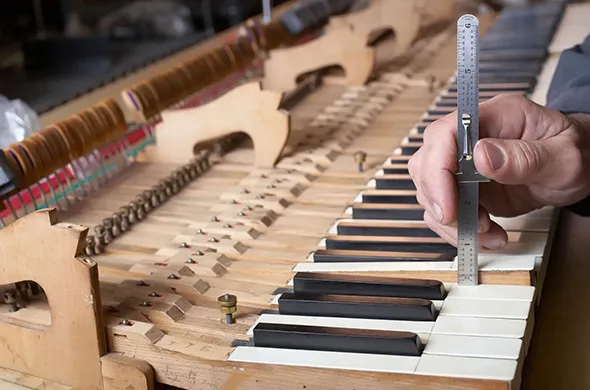
Why Pianos Go Flat Over Time
Pianos naturally go flat due to seasonal changes in temperature and humidity. If a piano hasn’t been tuned for many years, it may require more than just a standard tuning.
The Importance of Pitch Raising
Modern pianos are designed to perform best at concert pitch (A=440). If a piano is 15 cents flat or more, a pitch raise is strongly recommended to restore optimal sound and tuning stability.
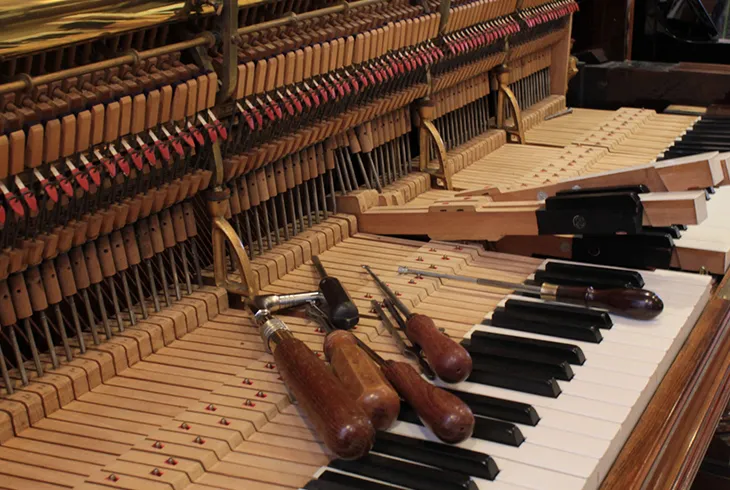
How a Pitch Raise Works
Pitch raising involves multiple tuning passes. The first pass overcorrects the pitch to account for tension changes. After the piano settles, a second pass is needed to fine-tune intervals that shifted unevenly.
- Identify subtle pitch drift between regular tunings.
- Frequent climate changes can affect your piano's internal structure over time.
- Maintain tuning stability with seasonal checks and humidity control solutions.
- Accurate pitch depends on stable internal string tension.
- Ensure long term value through careful, regular checkups.
- Keep keys balanced and action responsive daily.
Perfection
- Make every piano note sound clear.
- We take our time to fix each part of your piano so every sound is just right and the music feels smooth and lovely.
- With careful work, we help your piano sound its best, so every song you play is clear, warm, and full of life.
Why frequent checks?
Frequent checks ensure your piano stays in top condition, preventing issues, maintaining tuning, and ensuring long term durability and sound quality.
- (+62)81 414 257
- support@domain.com
Lasting Piano Wellness
Keep Your Instrument Sounding Great For Years
String Inspection
We check each string carefully to ensure perfect tension.
Action Regulation
Each key’s movement is adjusted for smooth, responsive play.
Soundboard Care
We maintain the soundboard for a clear, resonant tone quality.
Pedal Adjustment
Pedals are fine tuned for balance, comfort, and control.